Build a Revenue Engine That Compounds
Recurring revenue compounds only when the company can consistently acquire, activate, retain, and expand the right customers. GTM OS helps executive teams align those systems around stronger unit economics, faster time-to-value, durable NRR, and deliberate revenue motions.
“In recurring revenue businesses, growth is not won at the point of acquisition. It is earned when the right customers reach value quickly, stay, expand, and create an engine that compounds.”
 Use Cases Hub
Recurring Revenue Economics Expose GTM Weaknesses
B2B SaaS and cloud software businesses can create the appearance of growth long after the underlying revenue engine has begun to weaken. New-logo acquisition can mask churn, discounting can mask weak product value, and expansion targets can conceal that customers are not reaching ROI fast enough to buy more.
The commercial reality is that recurring revenue compounds only when the company can consistently acquire, activate, retain, and expand the right customers. Growth breaks when those systems are disconnected.
NRR Decays Beneath Top-Line Growth
New ARR may be growing while churn, contraction, and weak expansion within existing accounts quietly erode the economic foundation of the business.
CAC Outpaces Customer Lifetime Value
Acquisition investment rises while payback periods stretch—especially when customers take too long to activate, adopt, or recognize value.
PLG and Sales-Led Motions Operate as Separate Businesses
Product signals do not reliably inform sales prioritization, sales-assisted customers receive inconsistent experiences, and ownership of conversion and expansion remains unclear.
No Shared Definition of a High-Value Customer
Marketing, Sales, Product, and Customer Success pursue different segments, use different qualification criteria, and optimize different measures of success.
Customer Time-to-Value Is Fragmented
The promise made in marketing and sales is not consistently translated into onboarding, adoption, value confirmation, and renewal readiness.
Expansion Becomes a Target Instead of a System
Product usage, customer outcomes, renewal risk, and commercial plays are not connected into one company-wide expansion engine.
Revenue Data Does Not Create Decisions
Teams have dashboards but lack a trusted cross-functional view of customer health, motion performance, pipeline quality, and the leading indicators of NRR.
For SaaS leaders, the issue is rarely a shortage of activity. It is a lack of alignment around the revenue system required to turn recurring revenue into durable, efficient growth.
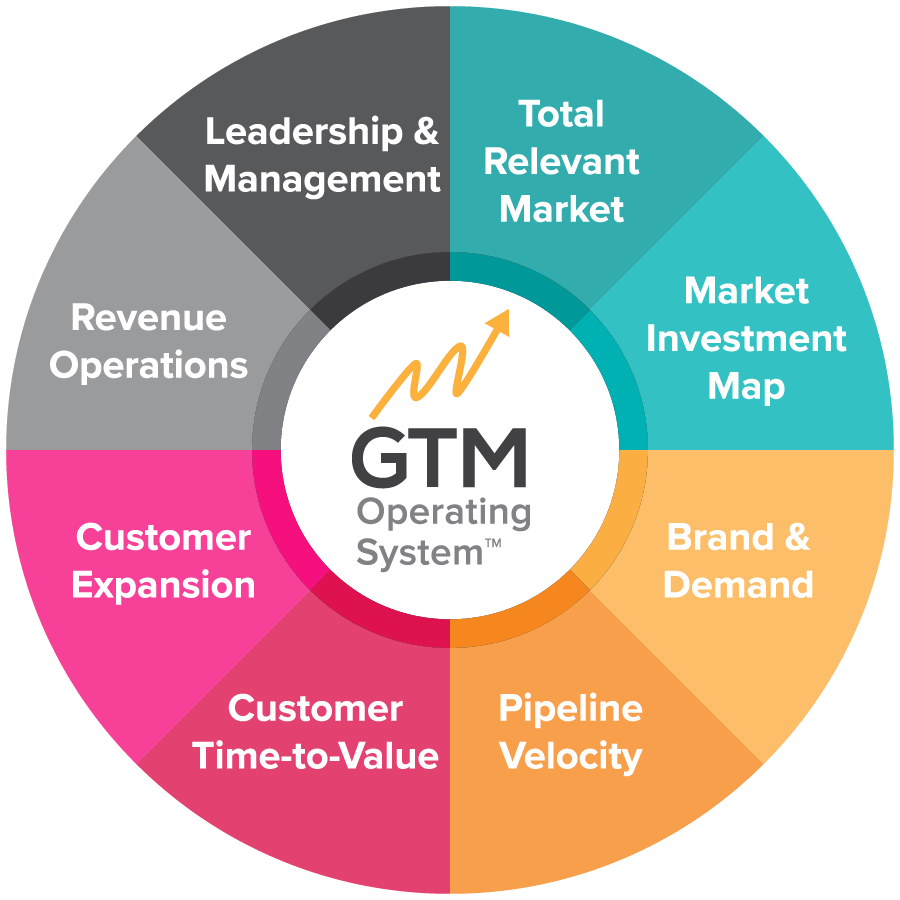
How GTM OS™ Is Applied to B2B SaaS & Cloud Software
Identify Where Profitable, Durable Growth Actually Exists
Move beyond a broad TAM narrative and define the Total Relevant Market: the customer segments, cohorts, and use cases where the company has the strongest potential to win, retain, and expand.
The first question is not where the market is biggest. It is where the company can build the strongest compounding revenue base.
Which customers are most likely to win, reach value, stay, and expand profitably?
Accelerate the Path to First ROI
Once high-value segments are clear, map the customer journey from purchase through adoption, value realization, renewal, expansion, and advocacy.
“What must happen for this customer to experience ROI quickly enough to retain and expand?”
For SaaS companies, fast activation is not merely a Customer Success metric. It is a leading indicator of retention, expansion, and CAC payback.
Build an NRR System, Not an Expansion Target
Customer Expansion turns recurring-revenue economics into an intentional operating model. Instead of asking account teams to “find upsell,” leadership identifies which customers can be upserved, what they should buy next, and which plays will improve renewal and expansion performance.
NRR is not a Customer Success target. It is the output of the entire GTM system.
The result is a coordinated system for protecting the installed base while increasing the value customers receive over time.
Align Revenue Motions, Commercial Execution, and Data
With the right market, customer value path, and expansion strategy defined, leadership aligns the commercial system required to produce efficient growth.
Revenue Motions define the combination of Segment + ICP, Product, GTM Motion, and Ownership required to produce a specific revenue outcome. Leadership determines where each GTM motion belongs:
The goal is not to run every motion. It is to give each motion a clear role, owner, and economic purpose.
- Revenue plays by segment, product, and motion
- Pipeline volume, quality, conversion, and sales-cycle improvement
- PLG-to-sales handoffs and sales-assisted conversion
- Qualification, forecasting, quota, and incentive alignment
- Trusted customer, pipeline, product, and revenue data
- Shared definitions across Marketing, Sales, Product, CS, and Finance
- Motion-level performance visibility
- Executive Scorecards and rhythms that expose risk early
“Which motions are producing durable revenue, where is the system leaking, and what decision does leadership need to make next?”
What Changes When the Revenue System Is Aligned
A Clear, Shared Definition of Where to Grow
Leadership aligns on the segments, cohorts, products, and use cases that produce the strongest revenue potential—not simply the largest theoretical market.
A More Durable NRR and Expansion Engine
Retention, adoption, renewal, and expansion become connected plays designed around customer value instead of isolated functional targets.
Lower Growth Friction and More Efficient CAC Payback
By prioritizing high-value customers and reducing time to first ROI, the company improves the economics of both acquisition and expansion.
A Deliberate Multi-Motion Growth Model
PLG, sales-led, partner-led, inbound, outbound, event, and community motions have defined roles, ownership, and performance expectations.
One Executive View of GTM Health
Leadership gains a shared view of strategy, metrics, ownership, and execution—making revenue risk visible early enough to act.
Core B2B SaaS Architecture Capabilities
Predictable Customer Expansion & Multi-Motion Excellence
How SaaS executives apply GTM OS to drive sustainable recurring revenue, higher NRR, and customer time-to-value.
"The GTM Operating System is the most powerful model on the market, and I’d love nothing more than to see it become the go-to standard for all GTM leaders."
"The GTM Operating System provides an invaluable, unifying foundation that solidifies and optimizes our product-to-market strategy for maximum executive confidence."
"We didn’t want TRM to be a slide—so we embedded ICP score right next to MEDDIC in forecast calls. If a rep is chasing a low-fit deal, the question becomes immediate: “Why do you believe this will close?”—and that drives better focus."
"GTM OS forced us to get brutally clear about the health of the business. We realized our problem wasn't just pipeline — it was retention. Logos were coming in and logos were going out. When you see that clearly, you stop pretending growth will fix itself."
Build a More Durable Recurring-Revenue Engine
A Certified GTM OS Partner can help your executive team identify the customers and motions that create the strongest economics, reduce time-to-value, strengthen NRR, and align the company around one shared view of GTM health.