Brand & DemandHow will you engage your customer with a differentiated PoV?
A CEO’s guide to escaping content chaos, building category authority, and crafting a point of view that compels buyers to act.
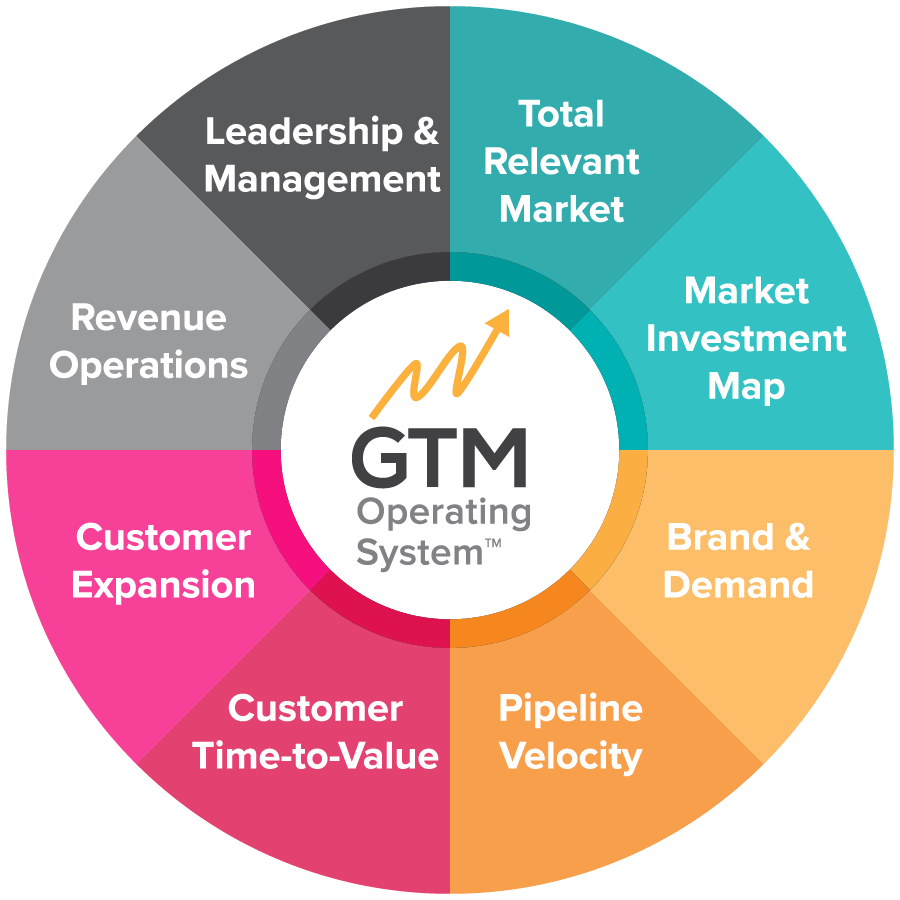 GTM OS™ Framework
Visit the websites of ten competing B2B software or services companies, and you will encounter almost identical language: “The all-in-one platform for modern teams,” “Drive efficiency and scale with AI,” “Transform your customer experience.”
When a company sounds like everyone else, it is forced to compete on the two worst variables in business: feature volume and price discounting.
Buyers do not buy features. They buy a clear, compelling perspective on why their current way of doing business is broken — and why your company is uniquely built to solve it.
Pillar 3 of the GTM Operating System — Brand & Demand — is where you build that conviction.
The Trap of Generic Feature Messaging
Most B2B positioning fails because it describes what the product does rather than why the world has changed. When commercial messaging is feature-led:
- •Competitors Easily Copy Feature Lists: Any software feature you launch will be copied within six to twelve months. Features are never a durable competitive moat.
- •Sales Demos Degrade into Checklists: Sellers spend 45 minutes walking through platform screens rather than diagnosing executive business pain.
- •Losses to “No Decision”: When buyers cannot clearly perceive how you are fundamentally different, they choose the safest path: doing nothing.
“Features can be copied overnight. A distinct, authoritative Point of View that names the buyer’s enemy cannot be replicated.”
The Core Diagnostic Question: “Why Should They Buy From You?”
In the GTM Operating System, Brand and Demand are not separate departments. They are two halves of the same commercial engine:
Brand = Point of View & Conviction
What you stand for, what you fight against, and why you are fundamentally different. Brand builds trust and makes customer acquisition efficient.
Demand = Distribution & Capture
The specific GTM motions (Outbound, Inbound, PLG, Partner, Event, Community) that deliver your POV to your Total Relevant Market and convert interest into qualified pipeline.
Building Your Point of View: “Name the Enemy”
A world-class Point of View (POV) answers three foundational questions for the buyer:
1. The Urgent Market Shift
What macro shift has occurred in your industry that makes the old way of doing things obsolete? (e.g., the transition from growth-at-all-costs to revenue efficiency).
2. Name the Enemy
You never name a competitor. You name the broken status quo, the manual process, or the flawed philosophy that hurts the customer (e.g., “Mathism,” spreadsheet silos, fragmented point tools).
3. The New Paradigm & Architecture
Introduce your framework for how modern companies successfully navigate this shift — establishing your company as the undisputed category leader.
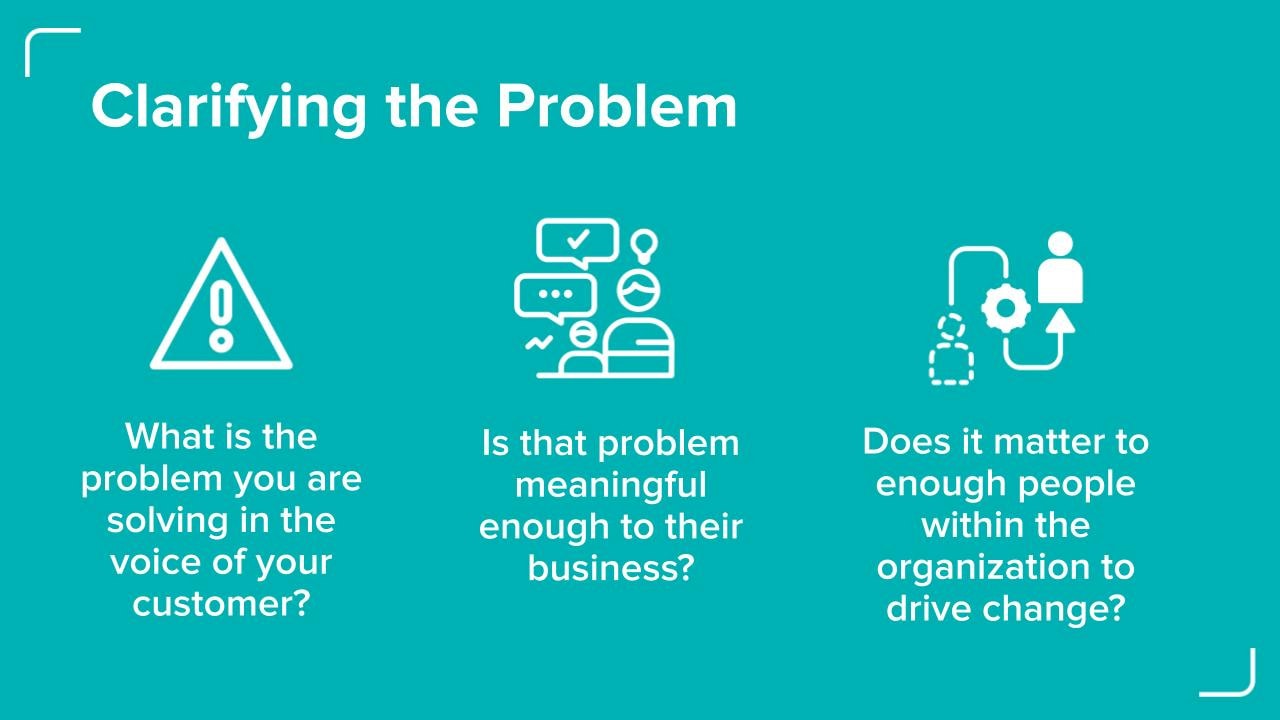
The Visual Anchor: Communicating Differentiation in 5 Seconds
In a crowded market, text paragraphs alone cannot cut through executive cognitive overload. Great B2B brands create a Visual Anchor — a clean conceptual diagram, matrix, or framework image that immediately explains why they are different.
When a buyer visits your website or an account executive opens a pitch deck, that single visual anchor does 80% of the heavy lifting. The buyer looks at the visual and thinks: “I immediately see how your approach is different from everything else I’ve seen.”
Category Maturity: Creating vs. Harvesting Demand
How you generate pipeline depends entirely on whether your target buyers are aware of their problem:
Demand Creation (Unaware)
When buyers do not yet recognize the cost of the problem. Marketing must educate, challenge assumptions, and evangelize the new POV.
Demand Harvesting (In-Market)
When buyers are actively searching for a vendor in an established category. Marketing must capture intent, demonstrate ROI, and accelerate conversion.
The 6 Go-to-Market Motions: How Demand Flows
Pillar 3 is the home of the 6 GTM Motions developed by GTM Partners. Rather than relying on a single channel, scaling companies orchestrate the right mix of motions:
High-intent organic search, educational research, AEO, and content that attracts active problem-solvers.
Account-based outreach, multi-threaded executive prospecting, and signal-driven SDR cadences into high-fit TRM accounts.
Freemium or self-serve product trials that deliver immediate value, converting active usage into Product Qualified Accounts (PQAs).
Co-selling with technology alliances, channel resellers, and system integrators who already own trusted relationships with your buyers.
High-touch executive dinners, curated masterclasses, and virtual summits that accelerate deal cycles and build community.
Cultivating a peer network of practitioners, champions, and industry leaders who evangelize your brand organically.
How Companies Implement Brand & Demand
Developing an uncopyable Point of View is an executive-level project involving the CEO, CMO, and Chief Revenue Officer.
Working with a Certified GTM OS Partner helps leadership step back from day-to-day feature talk, uncover true customer differentiation, build your visual anchor, and orchestrate the right GTM motions.
Engage a Certified GTM OS Partner for Pillar 3 (Brand & Demand):
- • Point of View (POV) Sprint: Define the macro shift, name your enemy, and articulate uncopyable differentiation.
- • Visual Anchor Creation: Design the core framework visualization that explains why you are different in 5 seconds.
- • Commercial Narrative & Messaging Playbook: Arm sales and marketing teams with consistent, battle-tested positioning.
- • GTM Motion Selection: Determine whether to prioritize Inbound, Outbound, PLG, Partner, Event, or Community motions.
What Executive Teams Say About the Brand & Demand Pillar
Perspectives on clarifying your point of view, differentiating in the market, and creating demand that connects to the customers you are best positioned to serve.
"One of the truths we had to acknowledge is that the core infrastructure product in our market is largely commoditized. A cage is a cage. The GTM OS POV work pushed us to think more deeply about how we differentiate beyond the physical product."
"Before this work, we didn’t have a truly differentiated story. We talked about the same things every other provider talks about—speed, expansion, infrastructure. The GTM OS POV work forced us to step back and define what actually makes us different in the market and how we communicate that consistently."
"One of the insights from this work was that we needed to frame our messaging much more from the customer's perspective. Instead of describing our services, we started focusing on the problems buyers actually feel and how they describe those challenges."
Ready to Stand Out With an Uncopyable Point of View?
Connect with a Certified GTM OS Partner to craft your Point of View, name the enemy, and align your marketing and sales engines around a compelling commercial narrative.