Revenue OperationsWhich GTM metrics drive your business health?
A CEO’s guide to escaping departmental dashboard battles, building the Executive GTM Scorecard, and evolving RevOps into the strategic operating system for growth.
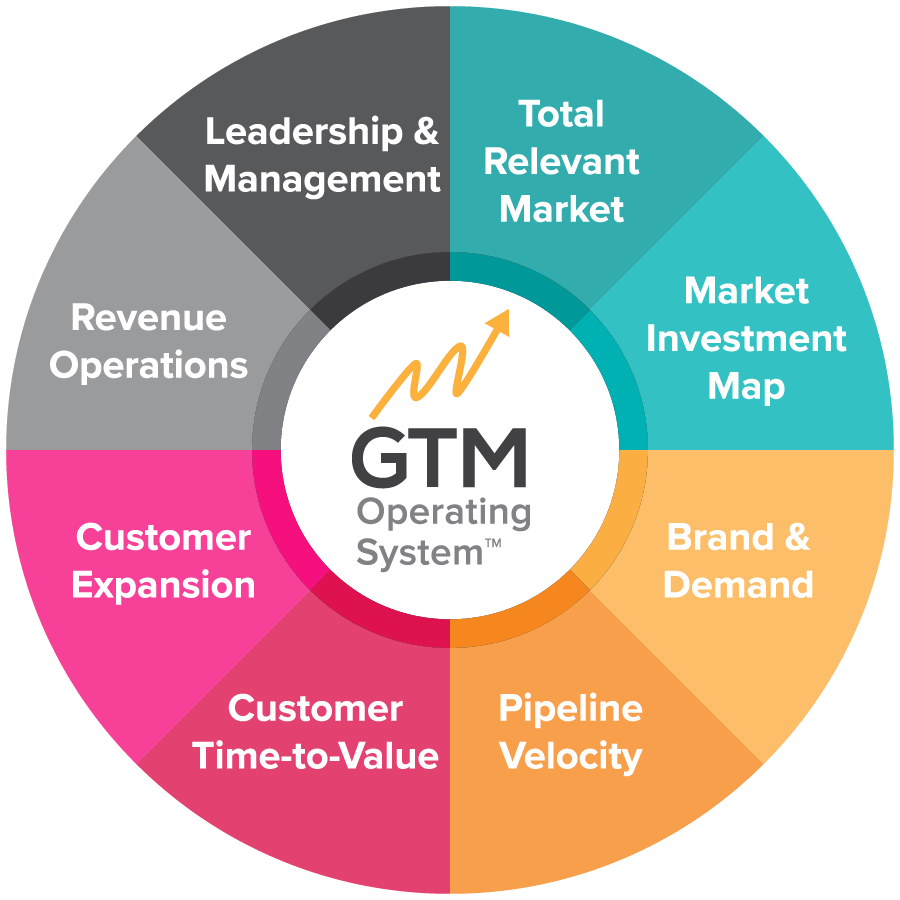 GTM OS™ Framework
In most executive team meetings, a familiar script plays out:
The Head of Marketing presents a dashboard showing a 40% increase in leads and green pipeline numbers. The Head of Sales presents a report showing low lead quality, stalled deal stages, and missed revenue quotas. The Head of Customer Success presents a retention dashboard showing unexpected churn.
The meeting quickly devolves into an opinion battle over whose numbers are accurate. When operations is fragmented into isolated silos — Marketing Ops, Sales Ops, and CS Ops — each department optimizes for its own local metrics while the company’s overall revenue performance suffers.
Pillar 7 of the GTM Operating System — Revenue Operations (RevOps) — provides the single source of truth that aligns the entire leadership team around true commercial system health.
The Departmental Dashboard Trap
When companies lack a centralized revenue operations function, they suffer from predictable operational friction:
- •Conflicting Definitions: Marketing defines a "Qualified Lead" differently than Sales defines an "Opportunity," causing attribution disputes.
- •Bloated Tech Stacks: Each department purchases point tools that do not integrate cleanly, creating data silos and duplicate software spend.
- •Inspection Over Insight: Executives spend hours debating data accuracy rather than making strategic capital and hiring decisions.
“Without RevOps, leadership meetings devolve into opinion battles. With RevOps, the executive team operates from a single source of truth.”
What Is Revenue Operations? (Pillar 7 Definition)
Revenue Operations is not CRM administrative maintenance. It is not building reports on demand for individual sales managers.
According to the GTM Operating System, Revenue Operations is the modern operating model for driving efficient, predictable revenue by using an interconnected, observable, end-to-end commercial system.
RevOps unites Marketing, Sales, Customer Success, and Product into a single high-performing revenue team, ensuring that every dollar invested in go-to-market is measurable, accountable, and optimized for return.
The 3 RevOps Organizational Maturity Models
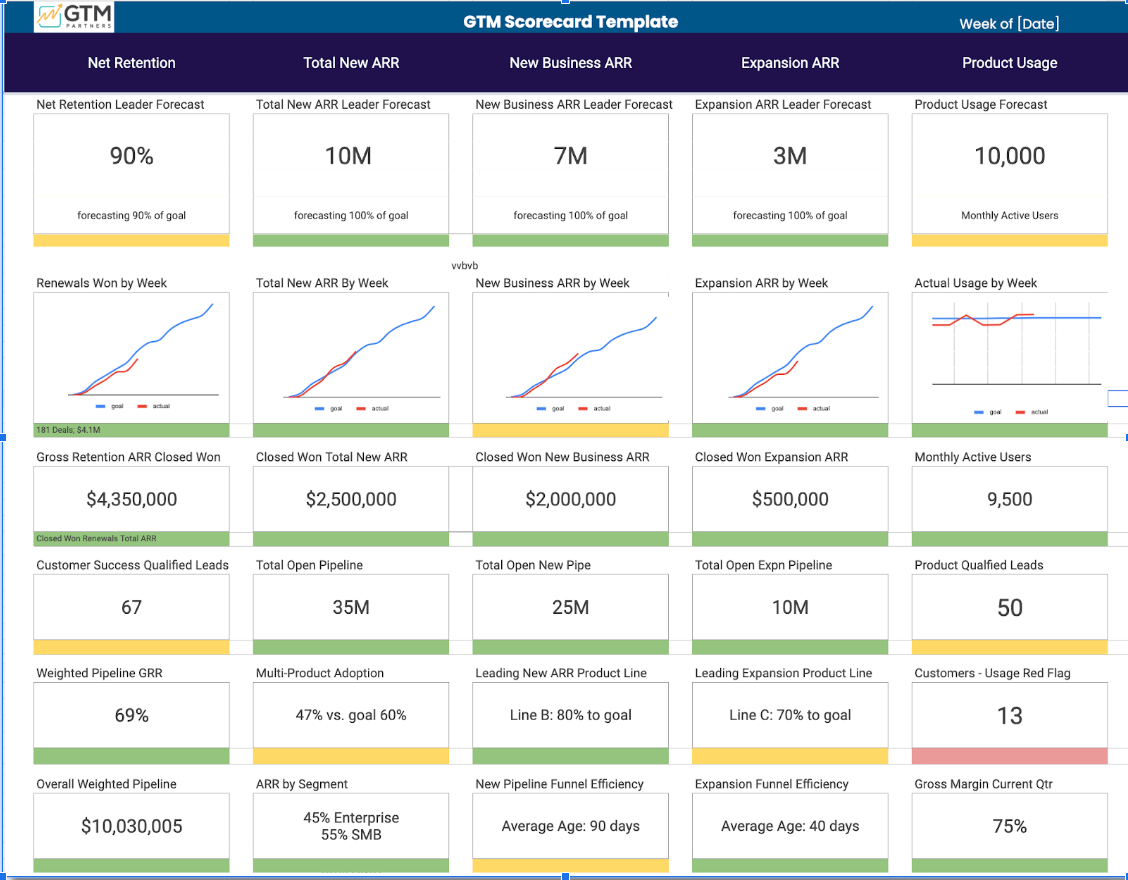
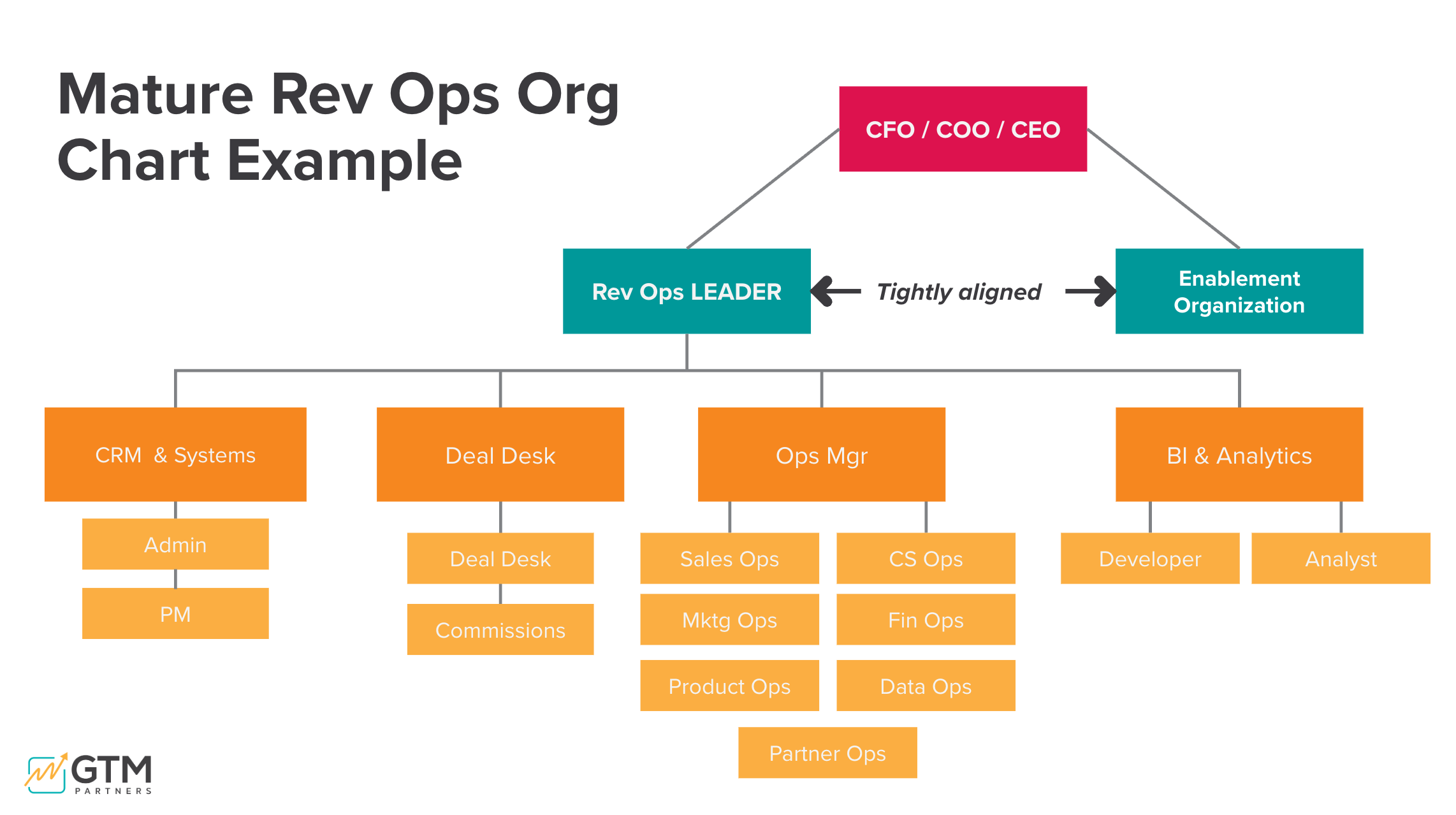
How a company structures its operations function evolves as commercial complexity increases across the 3Ps of Go-to-Market (Problem, Product, Platform). Rather than forcing a massive enterprise operations structure on an early-stage startup, leadership must align their RevOps maturity with their current stage of market fit and growth transformation:
1. Problem Market Fit (Ad-Hoc Operations): In the earliest stage, operational tasks are handled on a part-time basis by sales leaders, marketers, or fractional administrators. Tooling is lightweight and disconnected, with department-level data and siloed decision-making focused on finding repeatable early traction.
2. Product Market Fit (Aligned / Federated Operations): As the company scales its core product offering, dedicated operations specialists are embedded within Marketing, Sales, and Customer Success. These practitioners meet regularly to establish a shared understanding of data, synchronize commercial handoffs, and align cross-departmental decision-making.
3. Platform Market Fit (Centralized Revenue Operations): When a company expands into multiple products, tiers, or acquisitions, operations must centralize under a dedicated RevOps executive reporting directly to the CEO, COO, or CRO. This unified team governs the end-to-end data architecture, shared systems, tech stack consolidation, and executive revenue scorecard across all GTM motions.
Measuring GTM Health vs. Departmental Vanity
Departmental metrics measure internal activity: email open rates, dials completed, support tickets closed.
GTM Health metrics measure commercial effectiveness. RevOps shifts leadership focus to the core indicators that determine enterprise health:
- • Acquisition Quality: ICP Win Rates, Pipeline Velocity by Motion, CAC Payback Period.
- • Customer Retention: Gross Revenue Retention (GRR), Time-to-Value (CTV) Days, 90-Day Activation Rate.
- • Compounding Growth: Net Revenue Retention (NRR), Expansion Velocity, Customer Lifetime Value (CLTV).
- • Capital Efficiency: Magic Number, Revenue per Employee, Gross Margin by Motion.
Designing the Executive GTM Scorecard
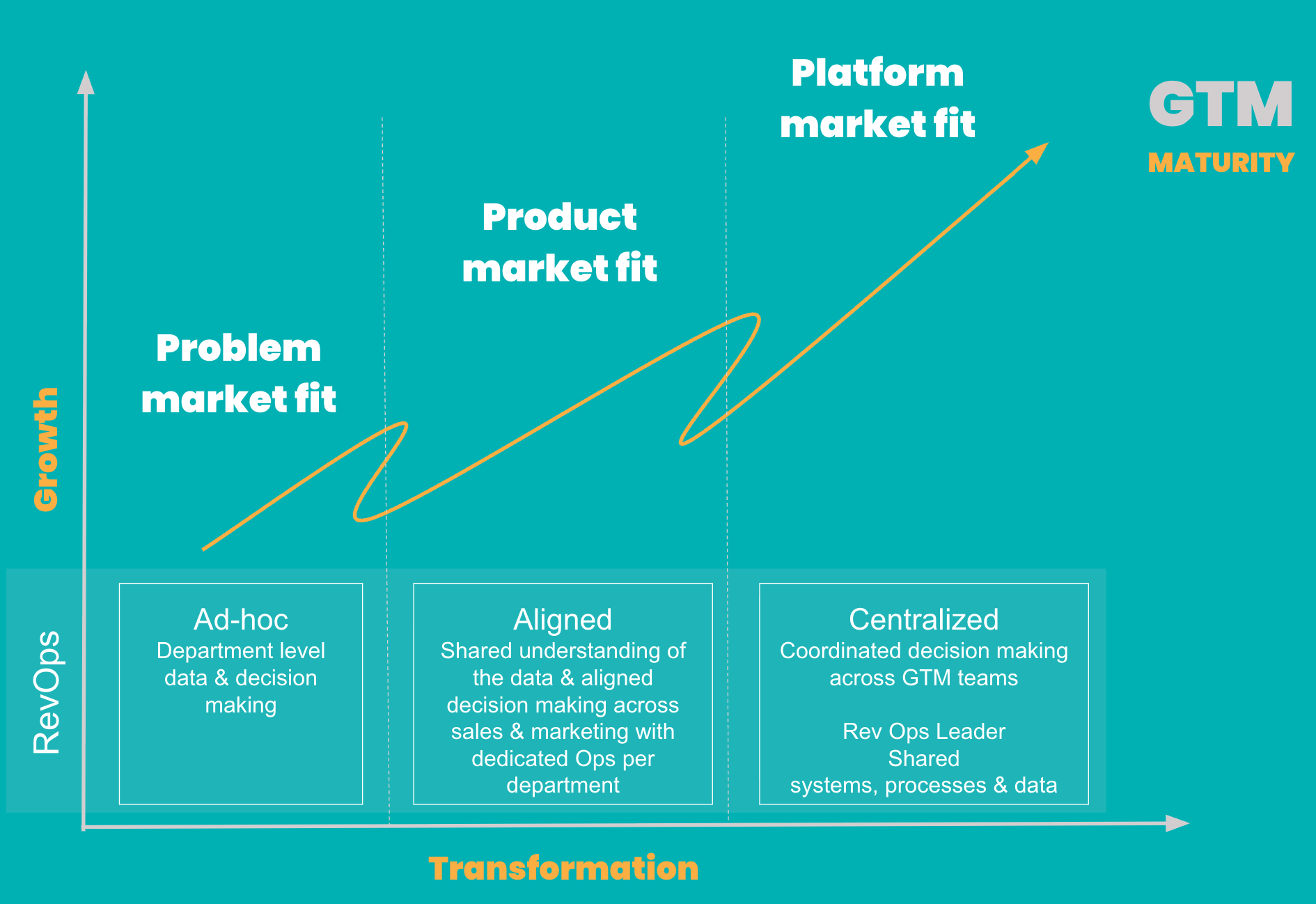
The Executive GTM Scorecard is the primary deliverable of Pillar 7. It provides the CEO, CMO, CRO, and CFO with a single shared dashboard for running the business.
Four Elements of an Effective Executive GTM Scorecard:
Establishing the Leadership Operating Rhythm
A scorecard without an operating cadence is just another dashboard nobody looks at. RevOps establishes the leadership cadence:
How Companies Implement Revenue Operations
RevOps implementation is an executive alignment engagement that establishes metric consensus before data plumbing begins.
Working with a Certified GTM OS Partner helps leadership step away from software tooling debates, select the metrics that truly represent commercial health, design the Executive GTM Scorecard, and install the operating cadence.
Engage a Certified GTM OS Partner for Pillar 7 (Revenue Operations):
- • RevOps Strategy & Maturity Audit: Assess current operating models (Ad Hoc, Aligned, Centralized) against 3Ps maturity.
- • Executive GTM Scorecard Design: Establish unified metric definitions, executive ownership, and refresh rhythms.
- • Single Source of Truth Alignment: Eliminate cross-departmental data conflicts between Sales, Marketing, and CS.
- • Executive Review Cadence: Install the weekly, monthly, and quarterly leadership operating rhythm.
What Executive Teams Say About Revenue Operations
Perspectives on how the Revenue Operations pillar creates a shared source of truth, aligns leadership around GTM health, and gives the executive team the data and metrics needed to make better decisions.
"One of the real shifts for us was focus. Everyone says they want focus, but when you actually start talking about stopping initiatives, people feel it immediately — it impacts pipeline, incentives, real dollars. GTM Planning forced us to make those tradeoffs explicit so the company can invest where it will actually move growth."
"One of the biggest shifts from working through the GTM operating model is that it forced us to focus. When you align the leadership team around what actually drives revenue instead of everyone chasing different priorities, the whole company starts moving in the same direction."
"One of the realities we surfaced as a leadership team is that parts of the staffing business had become a grind — constantly replacing churn. It forced us to step back and think more strategically about where the company should really focus."
Ready to Align Leadership Around a Single Source of Truth?
Connect with a Certified GTM OS Partner to design your Executive GTM Scorecard, unite fragmented departmental metrics, and install an enduring leadership operating rhythm.