Align the Entire Ecosystem Around Value
B2B2C, marketplace, channel, broker, and ecosystem businesses do not have one customer journey or one definition of value. Growth depends on coordinating the enterprise buyer, the partner or channel, and the end user around one shared system for value creation, adoption, economics, and expansion.
“In a multi-stakeholder business, a signed partner is not growth and a signed customer is not adoption. Growth happens only when every participant in the ecosystem can see, create, and capture value.”
 Use Cases Hub
When a Signed Partner Does Not Equal Growth
Growth breaks when leadership treats a multi-stakeholder model like a conventional direct-sale motion. Signing the enterprise customer, recruiting the partner, or launching the marketplace listing is not the same as creating active end-user adoption, repeat usage, or durable economics.
Partner Acquisition Without Partner Activation
The business wins logos, distributors, brokers, or ecosystem partners—but lacks a clear better-together value story, enablement path, shared ownership model, or incentive to make the relationship productive.
Enterprise Value Is Disconnected From End-User Value
The buyer may see strategic potential, but the end user does not reach value quickly enough. Low activation, fragmented onboarding, and unclear handoffs turn a signed account into an underutilized channel.
Misaligned Incentives Across the Network
The enterprise wants efficiency or retention, the partner wants margin and simplicity, and the end user wants immediate utility. Without a shared model, adoption becomes someone else’s responsibility.
Brand & Demand Stops at the First Buyer
The company may successfully sell through or sell with a partner but fail to create awareness, trust, and demand among the people who must actually use the product. Co-marketing becomes sporadic rather than a repeatable demand system.
Attribution Obscures the Real Constraint
Multi-sided models create long conversion paths and shared ownership. Teams cannot see whether growth is constrained by partner recruitment, partner activation, end-user adoption, time-to-value, conversion, retention, or expansion.
Expansion Becomes Account Management Instead of Network Growth
Teams focus on renewing contracts instead of understanding which partner cohorts, user cohorts, geographies, or use cases have the greatest potential to deepen utilization, expand value, and create durable revenue growth.
The core issue is not simply “more partners” or “more users.” It is whether the business has a coordinated system for aligning value, ownership, adoption, measurement, and expansion across the full ecosystem.
How GTM OS™ Is Applied to B2B2C & Ecosystem Networks
Define Where the Network Can Grow
Identify the highest-value enterprise, channel, partner, and end-user cohorts—not just the largest available audience. The goal is to understand which combinations of buyer, partner type, use case, and end-user segment produce the strongest adoption, retention, and expansion outcomes.
Move beyond a conventional ICP toward a multi-stakeholder growth model.
Which ecosystem relationships are most likely to convert into sustained utilization and durable revenue?
Align the Offer, Economics, and Ownership
Determine which products or solutions create the highest value for each stakeholder, how they should be packaged, and which GTM motion should own the path to market. In ecosystem models, this includes defining the better-together story: why the enterprise, channel partner, platform, or broker is better off bringing the solution to its customers or users—and what must be true commercially and operationally for the motion to work.
Create Demand and Accelerate Time-to-Value Across Both Tiers
Why should the enterprise or channel partner choose, promote, and invest in the relationship?
Why should the consumer or user adopt, engage, and continue using the solution?
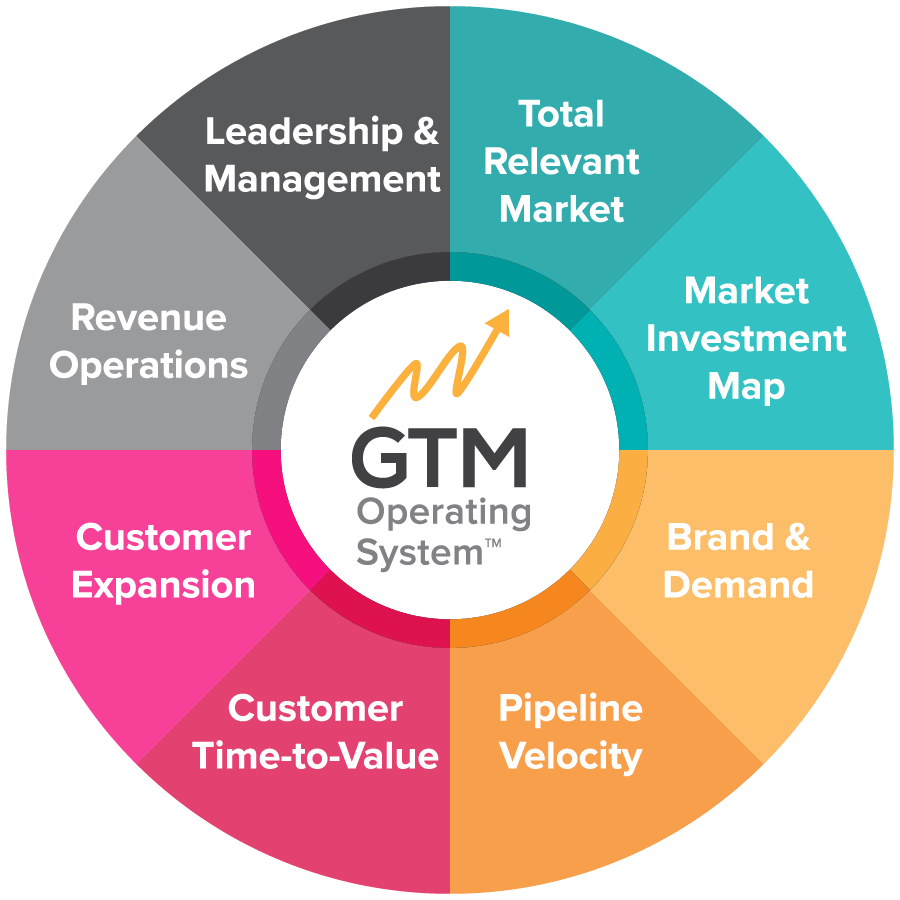
Brand & Demand defines the messaging, co-marketing approach, and shared demand-generation plays needed to create and harvest demand across the network. Customer Time-to-Value ensures the promise made upstream becomes value experienced downstream.
Brand & Demand creates the promise upstream. Customer Time-to-Value ensures that promise becomes value downstream.
This operational step coordinates partner enablement, handoffs, onboarding cadences, first-value milestones, early adoption telemetry, and friction points across both tiers.
Scale Adoption, Expansion, and Accountability as One System
Once the model is working, leadership needs a shared system for improving it.
Customer Expansion identifies the partner and user cohorts with the greatest upside and builds the plays required to drive renewals, increased utilization, upsell, cross-sell, and new-market growth.
Revenue Operations establishes a single source of truth across the ecosystem—connecting partner activity, customer conversion, user adoption, revenue, retention, and expansion.
Leadership & Management creates the clarity, alignment, accountability, and operating rhythm required to coordinate teams that would otherwise work against separate functions and incentives.
“Where is growth breaking, who owns the next move, and what metric proves the system is improving?”
What Ecosystem Leadership Teams Gain
A Clear Multi-Stakeholder Growth Model
Clarity on the enterprise, partner, and end-user segments that create the strongest path to efficient growth.
Higher Partner and Channel Activation
A defined better-together story, ownership model, and enablement path that turns signed partners into productive routes to market.
Faster End-User Time-to-Value
A coordinated experience that reduces friction between enterprise purchase, partner distribution, and actual user adoption.
A More Reliable View of Ecosystem Economics
Shared metrics and attribution that distinguish acquisition from activation, utilization, retention, and expansion.
Cross-Functional Alignment Around Network Growth
Sales, partnerships, marketing, customer success, product, and operations operate against one set of priorities—not disconnected stakeholder-specific initiatives.
Core Multi-Stakeholder Capabilities
Predictable Multi-Stakeholder Scale
How executives use GTM OS to align partner channels, activate indirect demand, and coordinate multi-tiered adoption.
"It's a fantastic, comprehensive framework that, despite any current operational pressures, is a worthwhile investment of executive time for long-term strategic benefit."
"One of the big realizations for us was that we had set the bar too low on qualification. We were generating volume, but not necessarily value. Once we stepped back and mapped our solutions against the right segments, it became obvious that fewer, higher-quality opportunities were far more valuable than just pushing more leads through the system."
"We already knew diversification and growth were important, but this work helped us formalize the process. Now the entire leadership team is aligned on the end goal and how we actually measure whether we're getting there."
Build a Stronger Multi-Stakeholder Growth Model
A Certified GTM OS Partner can help your executive team clarify the right ecosystem segments, align partner economics and ownership, improve activation, and build a more accountable path from partner acquisition to end-user adoption and expansion.